
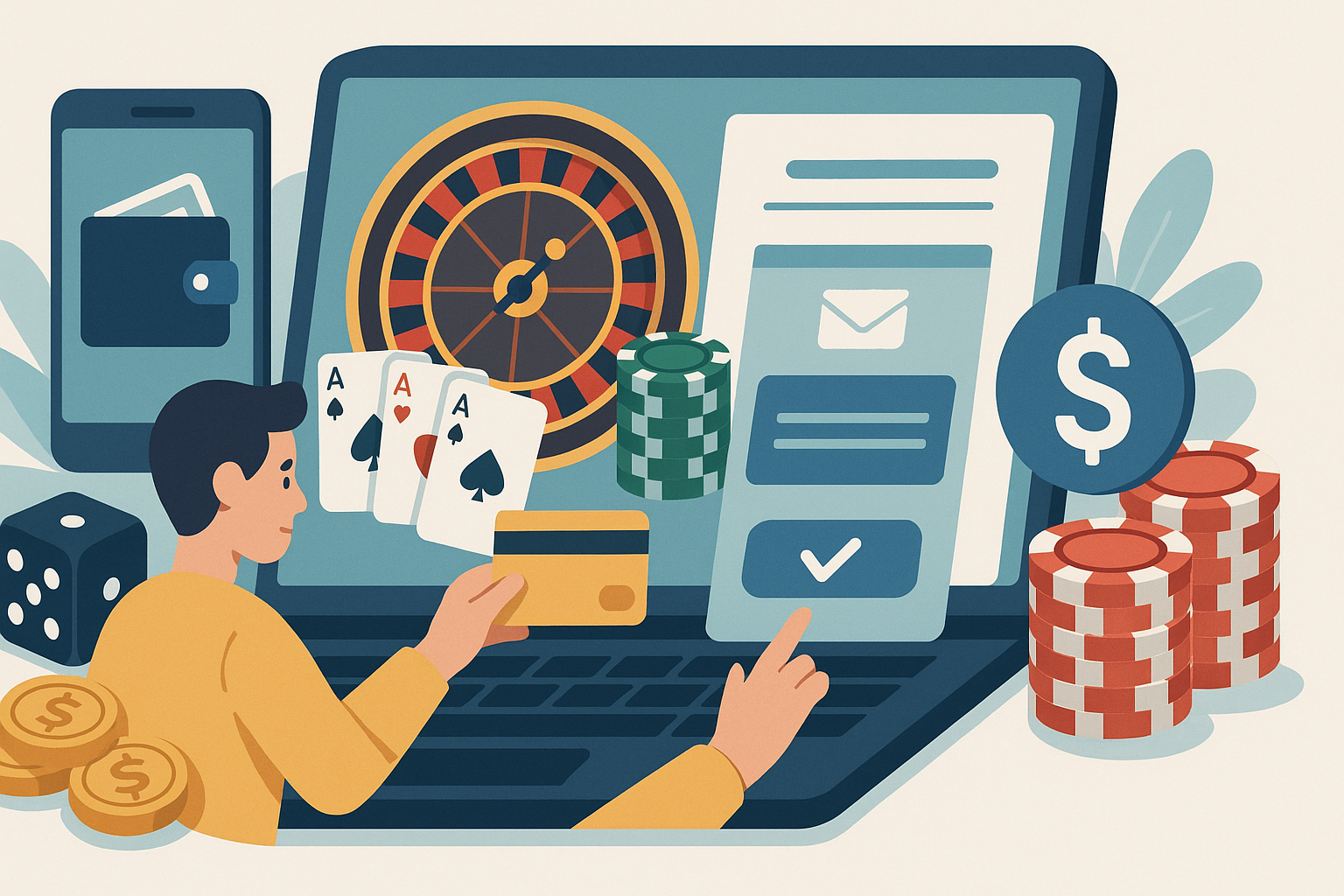
Understanding Payment Methods at Online Casinos
Choosing how to deposit and withdraw funds is one of the first decisions new players face when exploring online casinos. The range of available payment methods has expanded significantly, offering options that balance convenience, security, and processing speed. Understanding these methods helps beginners make informed choices that align with their preferences and circumstances.
This guide examines the main payment categories available, their characteristics, and practical considerations for new users. Always verify that any online gambling activity complies with local regulations in your jurisdiction, and approach casino play as entertainment rather than a financial strategy.
Traditional Banking Methods
Credit and Debit Cards
Credit and debit cards remain among the most widely accepted payment methods at online casinos. Visa and Mastercard dominate this category, with many platforms also accepting American Express or Discover. These methods offer familiarity for users already comfortable with online shopping.
Deposits typically process instantly, allowing immediate play. Withdrawals to cards generally take between 3-5 business days, though some institutions may apply additional processing time. Some banks categorize casino transactions as cash advances, potentially incurring extra fees or higher interest rates on credit cards. Checking with your card issuer beforehand can prevent unexpected charges.
Bank Transfers
Direct bank transfers provide a straightforward option for moving funds between your bank account and casino account. While highly secure, this method tends to be slower than alternatives—deposits may take 1-3 business days, with withdrawals potentially requiring 5-7 business days.
Bank transfers suit players who prioritize security over speed and don't mind waiting for transactions to complete. Some platforms charge fees for this service, so reviewing the fee structure before initiating transfers is advisable.
Digital Wallets and E-Wallets
E-wallets have become increasingly popular for online casino transactions due to their speed and added privacy layer. These services act as intermediaries between your bank and the casino.
PayPal
PayPal offers buyer protection and widespread recognition, though availability for casino transactions varies by region and regulatory environment. Where accepted, transactions typically process quickly with minimal fees.
Skrill and Neteller
These e-wallets specifically cater to the online gambling sector. Both provide fast deposits and withdrawals—often completed within 24 hours. Users fund their e-wallet from a bank account or card, then transfer funds to casinos without sharing banking details directly with multiple platforms.
Registration requires email verification and identity documentation. Some e-wallets charge small fees for currency conversion or withdrawals to bank accounts.
Other Digital Options
Services like Apple Pay, Google Pay, and Samsung Pay integrate mobile convenience into casino payments. These methods use existing card information stored on devices, adding biometric security layers. Availability depends on the specific casino platform.
Prepaid Cards and Vouchers
Prepaid solutions offer budget control and enhanced privacy. Paysafecard, a prominent voucher system, allows users to purchase cards with specific amounts at retail locations. Players then enter the voucher code at the casino to deposit funds.
This method prevents overspending since you can only deposit the prepaid amount. However, prepaid options typically support deposits only—withdrawals require an alternative method. This makes them suitable for players who want strict deposit limits but less practical as a complete payment solution.
Cryptocurrency Options
Bitcoin and other cryptocurrencies represent the newest payment category at online casinos. These digital currencies operate on blockchain technology, offering decentralization and pseudonymity.
Cryptocurrency transactions often process faster than traditional banking, sometimes within minutes. Transaction fees tend to be lower than conventional methods. However, cryptocurrency values fluctuate significantly, introducing additional variability to deposits and withdrawals.
Using cryptocurrency requires establishing a digital wallet and purchasing coins through an exchange—adding complexity for beginners unfamiliar with this technology. Regulatory treatment of cryptocurrency gambling varies considerably across jurisdictions.
Key Factors When Choosing a Payment Method
Processing Speed
Consider both deposit and withdrawal timeframes. While most deposits process quickly, withdrawal speeds vary significantly between methods. E-wallets typically offer the fastest withdrawals, while bank transfers take longest.
Fees and Costs
Review fee structures for both deposits and withdrawals. Some methods charge percentage-based fees, others apply flat rates, and many offer free transactions. Currency conversion fees may apply when your account currency differs from the casino's operating currency.
Security Considerations
All reputable payment methods employ encryption and security protocols. However, methods like e-wallets and prepaid cards add privacy by limiting direct sharing of banking details. Verify that the casino itself holds appropriate licensing and uses secure connections (HTTPS).
Availability and Limits
Payment method availability depends on your location and the casino's supported options. Additionally, each method typically has minimum and maximum transaction limits that may influence your choice.
Practical Steps for Beginners
Start by reviewing the payment methods section of your chosen casino before creating an account. Confirm that your preferred method is available and review associated fees and limits.
When making your first deposit, consider starting with a small amount to test the process. Keep records of all transactions, including confirmation numbers and dates.
Before requesting a withdrawal, complete any required identity verification processes. Most licensed casinos require documentation confirming identity and address—preparing these documents in advance streamlines the process.
Maintain awareness of your spending by setting personal deposit limits, a feature many platforms offer. Remember that online casino activity should remain within your entertainment budget and comply with all applicable local regulations.
Final Considerations
The appropriate payment method depends on individual priorities regarding speed, privacy, security, and convenience. Many experienced players use multiple methods—perhaps an e-wallet for regular transactions and bank transfers for larger withdrawals.
Payment technology continues evolving, with new options regularly emerging. Staying informed about available methods helps optimize your online casino experience while maintaining responsible financial practices.