
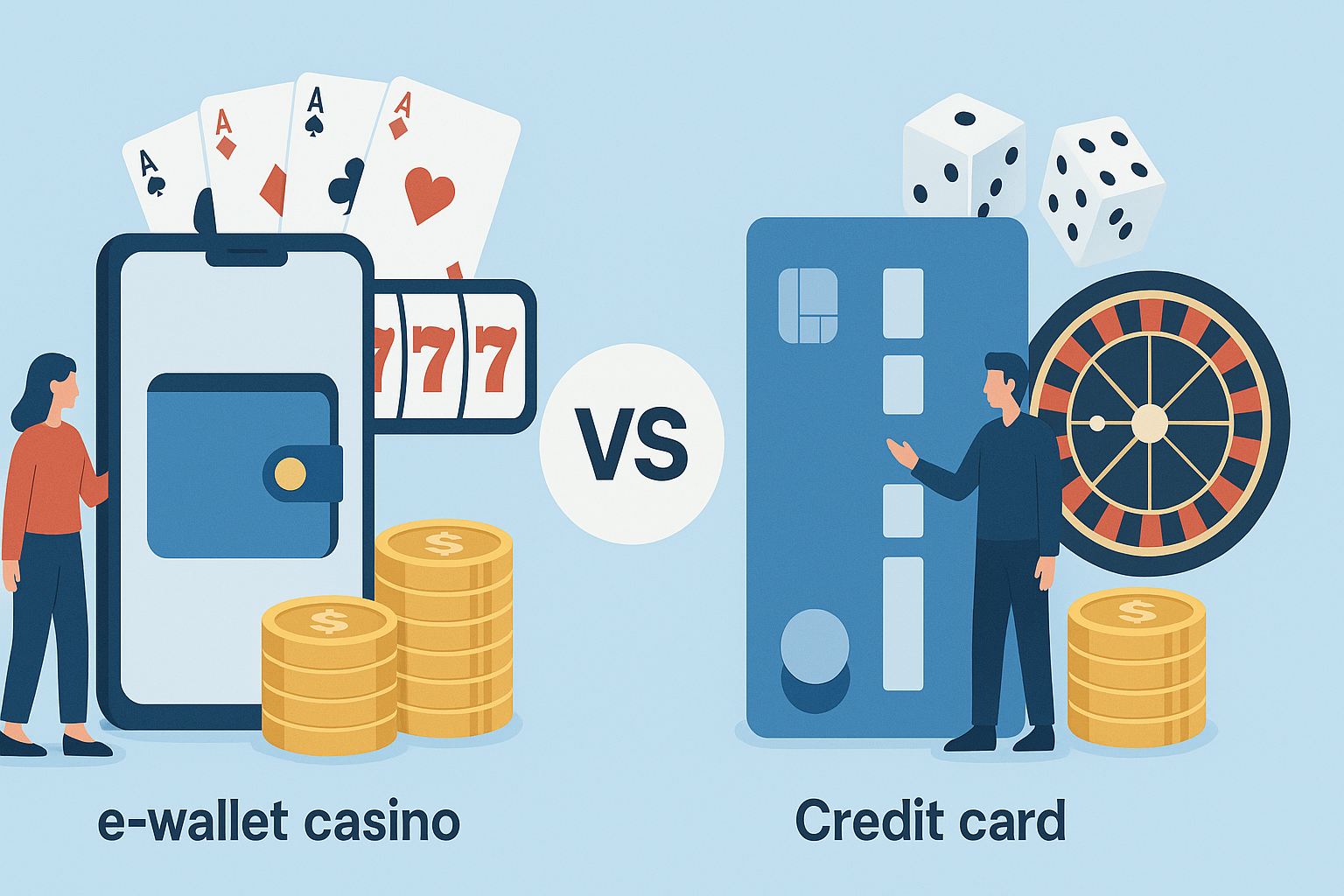
Understanding Payment Methods in Online Casinos
Online casinos offer various payment methods for deposits and withdrawals, with e-wallets and credit cards being among the most common options. Each payment method carries distinct characteristics regarding transaction speed, fees, security features, and acceptance rates. This guide examines the practical differences between these two approaches to help users make informed decisions based on their individual circumstances.
What Are E-Wallets and Credit Cards in Casino Contexts
E-wallets are digital payment platforms that store funds electronically and facilitate online transactions. Popular examples include PayPal, Skrill, Neteller, and ecoPayz. Users load funds into their e-wallet account from a bank or card, then use the e-wallet to transfer money to and from online casinos.
Credit cards, such as Visa and Mastercard, allow direct transactions between the cardholder's credit line and the casino. Users enter their card details on the casino's payment page to complete deposits, with withdrawals typically returning to the same card when permitted.
Transaction Speed Comparison
Deposit Processing Times
E-wallet deposits typically process instantly or within minutes. Once funds exist in the e-wallet account, transfers to casino accounts occur almost immediately, allowing users to begin playing without delay.
Credit card deposits also generally process quickly, usually appearing in casino accounts within minutes. However, some transactions may require additional verification steps, particularly for first-time deposits or larger amounts.
Withdrawal Processing Times
E-wallets demonstrate a significant advantage during withdrawals. Many casinos process e-wallet withdrawals within 24-48 hours, with some completing transactions in just a few hours after approval. Once funds reach the e-wallet, users can transfer them to their bank account or use them for other purposes.
Credit card withdrawals typically take considerably longer, often requiring 3-5 business days or more. Some jurisdictions and card issuers restrict gambling-related credits, which may complicate or prevent direct credit card withdrawals entirely. In such cases, alternative withdrawal methods become necessary.
Security and Privacy Considerations
E-Wallet Security Features
E-wallets provide an additional layer of separation between casino sites and personal banking information. Users share only their e-wallet account details with casinos, keeping bank account and card numbers private. Most e-wallet services employ encryption, two-factor authentication, and fraud monitoring systems.
This separation can be particularly valuable for users who prefer not to share financial details across multiple platforms or who have concerns about data breaches at gambling sites.
Credit Card Security
Credit cards offer established consumer protection mechanisms, including chargeback rights and fraud liability limits. Card networks use security protocols such as 3D Secure verification for online transactions. However, using credit cards requires sharing card numbers, expiration dates, and security codes directly with casino platforms.
Users should verify that any casino employs SSL encryption and maintains proper licensing before entering credit card information.
Fees and Costs
E-wallets may charge fees for currency conversion, account maintenance, or withdrawal to bank accounts. Some e-wallet services impose inactivity fees after prolonged periods without transactions. However, many casinos do not charge additional fees for e-wallet deposits or withdrawals.
Credit cards typically do not charge fees for standard purchases, but casino transactions may be classified as cash advances by some issuers. Cash advances often carry higher interest rates and immediate interest accrual without grace periods. Currency conversion fees may also apply for international transactions.
Users should review their credit card terms and e-wallet fee structures to understand the actual costs involved.
Acceptance and Accessibility
Not all online casinos accept every payment method. Credit cards enjoy widespread recognition, but some jurisdictions restrict their use for gambling transactions. Banking institutions in certain regions may decline gambling-related credit card transactions based on local regulations or internal policies.
E-wallet acceptance varies by casino and region. Some platforms specialize in specific markets and may not be available in all countries. However, casinos that do accept e-wallets often process them more favorably due to lower processing costs and reduced chargeback risks.
Practical Steps for Using Each Method
Using E-Wallets
- Create an account with a reputable e-wallet service
- Complete identity verification requirements
- Fund the e-wallet account through bank transfer or card
- Select the e-wallet option in the casino's cashier section
- Enter the transaction amount and confirm
- Log into the e-wallet to authorize the payment
Using Credit Cards
- Verify that the casino accepts your card type
- Navigate to the casino's deposit section
- Enter card number, expiration date, CVV code, and billing information
- Specify the deposit amount
- Complete any additional security verification
- Confirm the transaction
Regulatory and Responsible Gambling Considerations
Payment method choices may affect responsible gambling practices. Credit card use involves borrowing money, which can lead to debt accumulation if not managed carefully. E-wallets require pre-funding, which may help some users maintain better control over their spending limits.
Local regulations vary significantly regarding online gambling and acceptable payment methods. Users are responsible for understanding and complying with laws in their jurisdiction. Some regions prohibit certain payment types for gambling specifically.
Regardless of payment method, users should establish personal limits, only gamble with funds they can afford to lose, and seek assistance if gambling becomes problematic. Both payment methods work best when integrated into a broader framework of responsible financial management.